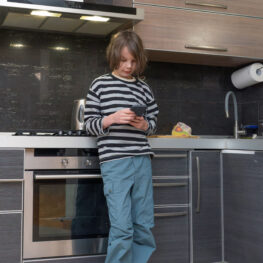


As screens grow more powerful, persuasive, and ever-present, many parents are feeling an urgent pull to protect something increasingly precious: childhood itself. Between smartphones, streaming platforms, AI tools, and social media, family life can start to feel fast, noisy, and nonstop. And whatever happened to playtime? This is why analog living is entering into homes.
In response, more families are intentionally slowing down. They’re limiting screen time, reducing digital overload, and reclaiming the kinds of offline experiences that once defined growing up — free play, imagination, boredom, and real connection.
That’s why analog living is shaping up to be one of the biggest parenting trends of 2026.
“Parents don’t need to eliminate screens entirely, but they benefit from intentionally balancing digital engagement with real-life, tactile experiences that support creativity, connection, and resilience — what many families today are rediscovering as analog living,” says Nicole Dreiske, media educator and author of The Upside of Digital Devices: How to Make Your Child More Screen Smart, Literate and Emotionally Intelligent.
What Analog Living Really Means
For most families, going analog isn’t about rejecting technology or chasing nostalgia. It’s about supporting a play-based, developmentally healthy childhood while screens and AI become more influential.
Some parents are choosing old-school entertainment:
-
Watching movies on VHS instead of endless streaming
-
Playing board games instead of apps
-
Installing landlines so kids can stay connected without smartphones
Even the 2025 rise of the Tin Can phone — a kid-friendly, landline-style device — sparked headlines and conversations among parents, highlighting the desire for simpler, slower forms of connection.
At its core, analog living is about healthy limits. Nicole Dreiske recommends setting boundaries not by forbidding screens, but by raising awareness of their effects. That shift naturally opens the door to more play, conversation, and real-world experiences.
Why Limits Matter
Dr. Becky Kennedy, author of the bestselling, Good Inside: A Guide to Becoming the Parent You Want to Be, describes analog living as part of a deeper craving for boundaries. In the digital world, everything is endless: one more scroll, one more level, one more video. Eventually, that limitlessness starts to feel unsettling.
Analog life, by contrast, has natural stopping points — and that’s a gift:
-
Finish the chapter.
-
Complete the puzzle.
-
Play one game. Someone wins, someone loses.
-
Move on.
Kids need those edges too. They don’t usually ask for limits, but when loving adults provide them, children feel safer, more capable, and grounded. Boundaries can be frustrating, yes — but they also build competence, confidence, and emotional security.
Simple Ways for Analog Living at Home
Analog living works best when it’s small, realistic, and repeatable. Here are some easy ways families can unplug without overhauling their lives:
-
Create Screen-Free Zones
Bedrooms, the dinner table, or even a favorite reading nook. These spaces encourage connection without feeling restrictive. -
Embrace Screen-Free Evenings
One or two nights a week, swap screens for board games, puzzles, drawing, or shared reading. Consistency beats perfection. -
Bring Back “One and Done” Activities
One game, one show, one chapter. Clear endings help kids tolerate transitions and develop emotional regulation. -
Let Kids Do Real-Life Tasks
Make lunch, fold laundry, call a relative, or help cook dinner. Everyday analog moments quietly build competence and confidence. -
Normalize Boredom
Resist filling every quiet moment with screens. Boredom often sparks creativity, imagination, and independent play. -
Go Outside — As Much as Possible
Walks, backyard play, or bike rides naturally lower stress and pull kids out of constant stimulation. Cold weather? Bundle up — even a few minutes outside is refreshing. -
Model Analog Habits Yourself
Put phones down during conversations. Read physical books. Say out loud when you’re choosing to unplug. Kids notice more than we think.
Analog Living Builds Resilience
We’ve all seen stories of kids (and college students) who struggle with everyday tasks — folding laundry, booking appointments, or making decisions. Beyond life skills, children also need the ability to handle frustration, discomfort, and disappointment without falling apart.
Dr. Becky sees this as one of the most hopeful parenting shifts today. “Kids become mentally strong when they learn to move through hard moments with support — not when those moments are erased, avoided, or handled for them,” she says.
Analog living teaches children how to tolerate discomfort, solve problems, and trust themselves — all while enjoying connection, play, and creativity along the way.
Preparing Kids for the Road Ahead
Going analog isn’t about making life harder. It’s about making kids stronger.
Instead of preparing the road for our kids, more parents are learning how to prepare their kids for the road — one small choice at a time. Remove screens from bedrooms, hold boundaries even when children protest, model repair when things go wrong.
No perfection required. Just presence, intention, and the willingness to slow down — together.