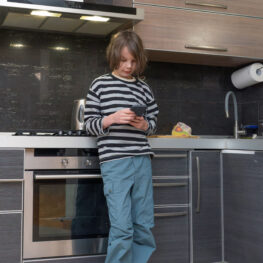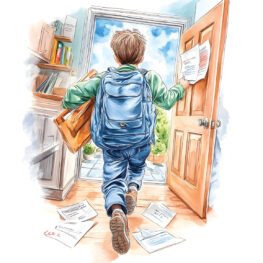


I’m Emily. I’m 33, I have three kids (5, 7 and 11) and I was spanked growing up. And I made a clear decision early on with my first baby: I’m not going to parent the way my parents parented me. Not because my parents were bad — but because I’ve learned there’s another way for discipline. A way that’s rooted in respect, boundaries, and staying deeply connected to my kids … even when they’re melting down in the middle of Target or refusing to put their shoes on for the tenth time. For me, discipline isn’t about control. It’s about teaching.
Why So Many Of Us Are Rethinking Discipline
If you’re anything like me, you probably grew up hearing things like:
“Because I said so.”
“Stop crying or I’ll give you something to cry about.”
“Put your shoes on now or we’re not going!”
That was normal. But today, a lot of us are choosing something different. According to popular psychologist, podcaster and author Becky Kennedy, many parents now see feelings as central to who children, well, to who we all are. That shift changes everything.
So instead of snapping at my 5 year old, “Hurry up with your shoes,” I might say:
“I feel badly when we’re late because we didn’t get ready on time.”
It’s not about guilt — it’s about connection and awareness.
“Kids are born with all of the feelings and none of the skills to manage those feelings,” writes Kennedy on Goodinside.com. And honestly, that idea changed how I see everything.
My job isn’t to punish my kids for struggling. It’s to teach them the skills they’re missing. It’s a choice to be on time, afterall.
Discipline Is Not Punishment (And That Shift Matters)
This is the biggest mindset change I’ve made as a parent: Punishment is about stopping behavior right now. Discipline is about teaching for the long term.
Positive discipline focuses on helping kids learn what to do instead of just reacting to what not to do. That means:
- Clear boundaries
- Consistent consequences
- Staying calm (even when it’s hard)
The goal? Raising kids who can regulate themselves, solve problems, and make better decisions — not just kids who behave when we’re watching.
“Discipline is really about teaching,” says Janet Lansbury, author of No Bad Kids: Toddler Discipline Without Shame. “Toddlers are taught through respectful feedback, rather than coerced.”
That line sticks with me on the hard days.
What I Do Instead of Spanking or Shaming
The American Academy of Pediatrics (AAP) has long advised against spanking and verbal shaming — and for good reason. I always felt so very sad when I got spanked. It also made me wary of my mother. Research shows harsh discipline may stop behavior in the moment, but it can increase stress and aggression over time.
So what do I do instead?
I Take My Child Aside
If emotions are running high, I don’t correct my child in front of everyone, I don’t care where we are. I gently take them to another room or area (even if they are fussing), and I get down on their level, and we talk.
Not lecture. Talk.
We walk through what happened:
- “What were you feeling?”
- “What made that so hard?”
- “What can we do next time?”
It’s slower. It takes more patience. But it actually teaches something.
I Stay Close, Even When Setting Boundaries
One thing I’ve learned: connection and boundaries can exist at the same time. I can be firm and loving.
“I won’t let you throw blocks. I’m going to put them away until your body is calm.”
Then I might offer a choice:
“Do you want to keep playing safely, or should I put them away?”
And then — I follow through calmly.
Patience Isn’t Optional (Even Though It’s Hard)
I won’t pretend this is easy. There are moments I want to yell. Moments I want instant compliance. Maybe that’s why parenting used to be so harsh. There wasn’t enough time for this. But I’ve learned this is the most important stuff. And I’ve learned that I have to pause. Take a breath. Say less. Mean what I say. Consistency over time matters more than intensity in the moment. And when my child does get it right — even in a small way — I notice:
“I saw how gently you played with your sister. That was really kind.”
What Positive Discipline Looks Like at Different Ages
Every stage is different, but the foundation stays the same: connection + boundaries.
Ages 1 – 2: Redirect and Prevent
Toddlers don’t have impulse control yet. I keep things simple and step in quickly when needed. If something’s unsafe, I calmly stop it and redirect:
“Blocks aren’t for throwing. Here’s a ball you can throw.”
And in between? So much affection.
Ages 3 – 5: Routines, Choices, Consequences
Preschoolers thrive on predictability. So I give simple choices to avoid power struggles:
“Do you want the red shirt or the blue one?”
If a toy gets thrown, it gets put away. Calmly. Immediately. No shame.
And yes — still lots of hugs.
Ages 6 – 11: Clear Rules and Earned Privileges
Now we talk more about responsibility. We have clear expectations, and privileges (like screen time) are tied to behavior. When something goes wrong, I ask:
“What happened? What can we do differently next time?”
It’s about building awareness, not fear.
PreTeens
I’m not here yet, but it’s just around the corner. My thought is that if I follow through with the earlier years with boundaries and love we’ll be able to figure out the preteen years. I know they will want a lot more independence and that we’ll work on setting rules together when possible, especially around phones and social plans. And that I will need to stick closer to him than he will realize.
Why I Believe This Works
Harsh discipline might get quick results. But it doesn’t build trust — it didn’t for me. And it doesn’t teach skills. According to the AAP, spanking is linked to increased aggression and doesn’t improve long-term behavior.
That’s not what I want for my kids.
I want my kids to:
- Understand their emotions
- Communicate clearly
- Make thoughtful decisions
- Feel safe coming to me — no matter what
And this is true about my marriage, too!