

It’s Christmas morning and I’m unwrapping a gift from my kids … and honestly? I already know what it is. Because yes, I was there when they bought it. With my money. But the way their little faces light up like human Christmas bulbs? Completely worth it. Helping them shop for gifts for their siblings, their dad and even me doesn’t feel silly at all — it feels adorable. And honestly, part of the mom job description. Sure, the budgeting lesson is … flexible … since I’m the one footing the bill, but still. We’re learning!
Here’s some helpful information for you about how differently parents do the kids-buying-presents thing. Mix and match. Do what you want. And try not to peek!
Letting Kids Shop for Christmas
Kids love giving gifts at Christmas — not just getting them. And when you turn them loose (in a structured, parent-guided way!) to shop for siblings, grandparents, cousins and yes, even you, the whole season becomes sweeter. And while it’s not easy to “teach” amid the hustle and bustle, Rachel Cruze, author of Smart Money, Smart Kids, says just talking things through before your kids go shopping can really help.
“Communicating with your kids is key,” Cruze says. “Set expectations and say, ‘Here’s what we have to work with this year,’ so that the kids see you’re making thoughtful decisions and they’re part of it.”
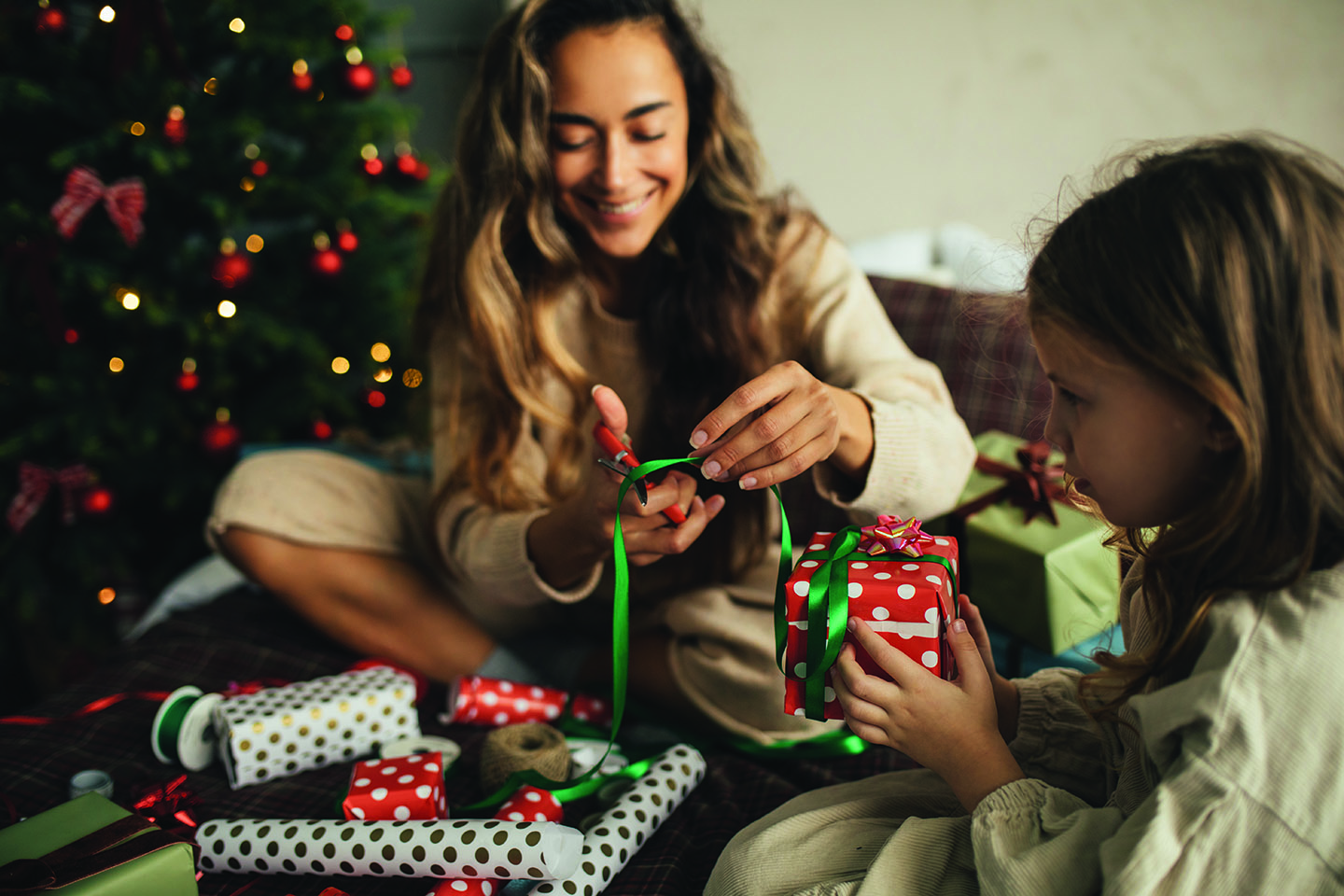
Let your kids do as much as they want to do. And when they wrap by themselves — let it be!
Here are several ways to let kids “shop” on their own:
1. Start with a “Shopping Budget” They Can See
Kids understand money best when they can actually hold it. Give each child a small envelope labeled with the names of the people they’re shopping for — and tuck in their shopping cash.
Younger kids: $10 per gift is perfect.
Big kids: $10 – $20 per person gives them wiggle room.
It’s simple, visual and suddenly kids feel like they’ve been promoted to Holiday Gift Manager.
2. Try the Parent-Pays-but-Kid-Picks Trick
This is the most-used, most-loved method for little shoppers who can’t quite handle a wallet yet. Here’s how it works: You walk the store together. They pick the gifts. You secretly pay. Everyone pretends you didn’t see the “World’s Best Mom” keychain they picked out for you.
If your child’s school hosts a holiday shop, it’s even better: send them in with your money and enjoy that Christmas-morning surprise (just get the tissues ready).
3. Give Big Kids a “Gift Budget Card”
For ages 7–12, a small shopping list plus a total budget is a great way to teach independence. Write down:
— Who they’re shopping for
— How much they can spend on each person
— Optional ideas (socks, books, candles, quirky gifts)
— Kids LOVE checking things off. It feels official
4. Keep the Wallet, Give Them the Power
If your kid is the impulsive type (“Look! A giant glitter unicorn! I need it!”), you can hold the money while still giving them full control over the choices. They pick the gifts. You approve the total. Everyone wins. No one comes home with a $19.99 glow sword for Grandpa.
5. Try a Prepaid Card for Tweens
Older kids feel very cool shopping with a prepaid Visa or kid-friendly debit card. When the money’s spent, it’s spent. They track their own purchases. You get to relax and sip that peppermint mocha.
And when your older kid tells you they ran out of money but still have people to shop for … that’s a hard lesson right there.
6. Letting Kids Shop: Them Earn Their Gift Budget
Tie a little holiday money to age-appropriate tasks. This is Cruze’s favorite way for the kids to earn shopping money (as long as they’re old enough). According to Cruze, “You work, you get paid. You don’t work, you don’t get paid.” Kids can earn spending money by:
— Helping wrap gifts
— Sweeping up pine needles
— Setting the table for holiday meals
— Other tasks you can think of at home
As they earn their “Christmas Cash,” kids feel proud spending money they worked for — even if it’s from wrapping paper duty.
7. For Tiny Shoppers: Set Up a “Home Holiday Store”
For preschoolers, you can create a simple table of low-cost items (candles, socks, bath bombs, stickers) and let them shop using play money or tokens. They feel independent. You stay sane.
The dog doesn’t end up with a scented candle that says, “You’re the Best Auntie.”
8. Praise the Thought, Not the Price
Letting kids shop matters. Because whether they buy a silly eraser or the shiniest ornament on the shelf, you can spotlight the intention behind the gift. “Wow, you remembered Daddy loves blue!” “You picked something Nana will really use!” Kids who feel appreciated become kids who love to give.
Wrap It Up (Literally)
No matter how wonky the tape job or how many times the wrapping paper rips, let kids wrap their own gifts. It’s adorable. It’s memory-making. And it’s exactly the kind of imperfection that makes Christmas magical.
Final Tip: The Secret Spot
Let kids hide all their gifts in a “super-secret” place until Christmas morning — under their bed, behind their books, in a shoe box.
Doesn’t everyone love the thrill of hiding presents?
Subscribe to our weekly Newsletter for parenting tips, top things to do, our #WINSday contest and lots more!