


Kids today are growing up in a world that moves faster and feels heavier than ever — where friendships are tested not just on the playground, but in the endless scroll of social media. Where comparisons creep in like shadows, and loneliness can lurk even in a room full of people. Parents, too, often feel stretched thin, pulled between responsibilities, distractions and the quiet, persistent pressure to “get it all right.” It’s no wonder we can sometimes feel a little untethered.
And yet, within the swirl of modern life, there is something quietly powerful: the small, steady choices you make each day for your family. They matter more than we often realize. By showing up fully, caring for your own well-being and truly listening to each of your kids, you lay down bricks of emotional safety and trust. These aren’t just comforting ideas — they are practical, lasting tools that help children feel seen, supported and never alone. In a world that can feel overwhelming, conscious habits in parenting can become anchors, grounding your family in steadiness and care. Because, according to a wide body of research today, a child’s good mental health is the result of their early and ongoing relationships with parents and other caregivers, particularly through the emotional connection and attachment they experience.
 1. BUILD STRONG RELATIONSHIPS
Strong families aren’t built through one dramatic gesture. They grow in the quiet rhythm of everyday life. Research from the American Academy of Pediatrics points to a few core ways to nurture connection:
Consistency in Connection: Family meals, bedtime chats, and one-on-one moments with each of your kids are like threads weaving a secure tapestry.
Active Listening: When your child speaks, resist the urge to interrupt. Mirror back what you hear, depending on what they tell you, as in, “That must have been frustrating.” It tells them their feelings are valid which is key to their wellness.
Affectionate Parenting: Words of love, pride and encouragement are like sunlight to a child’s heart. Hugs, high fives or a reassuring hand on the shoulder nourish kids as they grow.
Safe Communication: Let mistakes be lessons, not shameful moments. Make space for play, conversation and laughter. Stability and warmth are the foundation on which families thrive.
2. LISTEN WITHOUT JUDGMENT
Listening well is harder than it sounds, even when a kid is upset. It requires patience, presence and sometimes swallowing the urge to correct or advise. Pause. Take a breath. Let your child finish.
Then respond with curiosity rather than conclusions: “What happened next?” or “How did that feel?”
Keep your voice calm and steady, your eyes on theirs and resist minimizing their experience. If you can listen without judgment, it’s a win.
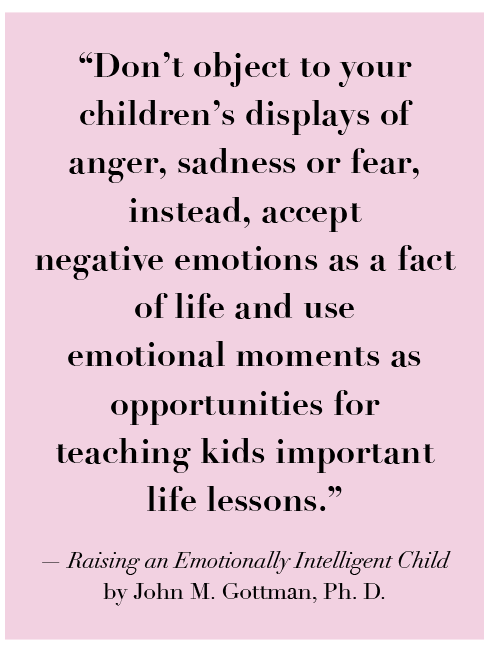
“Don’t object to your children’s displays of anger, sadness or fear, instead, accept negative emotions as a fact of life and use emotional moments as opportunities for teaching kids important life lessons and building closer relationships with them,” says John M. Gottman in his book, Raising an Emotionally Intelligent Child.
When kids feel truly heard, they will open their hearts more fully — and you can build a bridge of trust that will carry them through challenges big and small.
3. COMMUNICATE OPENLY
Open communication is the cornerstone of mental well-being. It’s not just about talking — it’s about creating a space where everyone feels valued, understood and safe. And keeping a peaceful tone is huge.
“The way we talk to our children becomes their inner voice,” wrote Adele Faber, co-author of the classic, How to Talk So Kids Will Listen & Listen So Kids Will Talk.
Model honesty and respect in discussions. Show kids that dialogue can be gentle, playful and problem-solving rather than blaming. Even in busy households, a few minutes of real, attentive conversation can make children feel like they don’t have to face their struggles alone.
4. TEACH EMOTIONAL AWARENESS
Feelings are a language, and you can help your child speak it. From an early age, help them to name emotions: “sad,” “frustrated,” “excited.”
Explore emotions through stories, books or shows: “How do you think that character feels?”
“When parents offer their children empathy and help them to cope with negative feelings like anger, sadness and fear, they build bridges of loyalty and affection,” Gottman says.
So avoid dismissing feelings and instead, acknowledge them. Emotional literacy is a lifelong gift that you can cultivate.
5. MODEL HEALTHY BEHAVIOR
Children watch more than they listen. Your habits, moods and reactions are the template for how they navigate life. That’s why it’s so helpful to speak kindly (even in disagreements) and to show problem-solving in action, as in, “Let’s tackle this step by step.”
And take care of your own health — sleep, nutrition and emotional check-ins. Recognize when you need a little break, to chat with a friend or a family member. Apologize when you’re wrong and demonstrate patience and kindness.
Modeling doesn’t mean perfection; it means showing kids that challenges can be met with grace, care and resilience.
“Habits are learned,” says Glennon Doyle, bestselling author and podcaster. “Children learn their habits by watching what we do, not by listening to what we say,” she adds.
6. PRIORITIZE YOUR OWN MENTAL HEALTH
Parenting is impossible to do well from a place of deep struggle. Depression, anxiety or burnout affect not just you but your child’s development and well-being. Seeking help — through therapy, medication or mind-body practices — is a powerful act of care for both yourself and your family.
As author, researcher and speaker Brené Brown reminds in her book, The Gifts of Imperfect Parenting, “What we are teaches children more than what we say, so we must be what we want our children to become.”
This is why your own mental health isn’t just about you — it’s a lesson in disguise. When you take time to rest, seek help if you’re struggling or simply pause to breathe, you’re teaching that emotional health matters. In other words, caring for yourself is one of the most powerful acts of love you can offer your child.
7. ENGAGE WITH YOUR KIDS
Don’t speak to your children through closed doors. Open the door, both literally and figuratively, and step inside their world. Notice, ask and listen — truly. Even teenagers want you to make the effort. Sometimes being present in a moment is more important than hours together.
“The relationship you have with your child shapes the structures and function of their brain,” says clinical professor and leading child development expert Dan Siegel. He is the author of The Whole-Brain Child; Parenting from the Inside Out and others.
Siegel says our earliest experiences influence how we emotionally self-regulate. So parents who engage with empathy and consistency help their kids develop a stronger capacity to manage stress. Engaging with your kids, Siegel says, literally helps shape their neurological foundation.
8. PRAISE EFFORT, NOT JUST RESULTS
Celebrate determination, curiosity and persistence. Replace, “You’re so smart!” with:
“I noticed how hard you worked on that!”
“You didn’t give up even when it was tricky.”
Effort-focused praise teaches children that growth matters more than perfection — and real growth comes from trying and trying again.
9. PROMOTE INDEPENDENCE
It begins with guided freedom. Start small: let them dress themselves, make simple choices and gradually take on responsibilities. Teach, practice together, then step back — ready to catch them if they stumble. Freedom, coupled with support, builds capability.
10. BE AVAILABLE AND REASSURING
Consistency in presence is an invisible string that weaves emotional safety. Don’t just occupy the same space — be emotionally present. Eye contact, full attention, calm responses and timing that respects your child’s rhythms create a secure, steady environment. When emotions run high, your calm can be the anchor they need.