

If you’ve ever stood in the grocery store aisle wondering, “Is this actually good for my kids?” — you’re not alone.
The new Dietary Guidelines for Americans (2025–2030) bring the biggest shift in nutrition advice in decades, and they’re especially important for you when you’re grocery shopping, cooking meals, and making daily decisions about what fuels your growing kids.
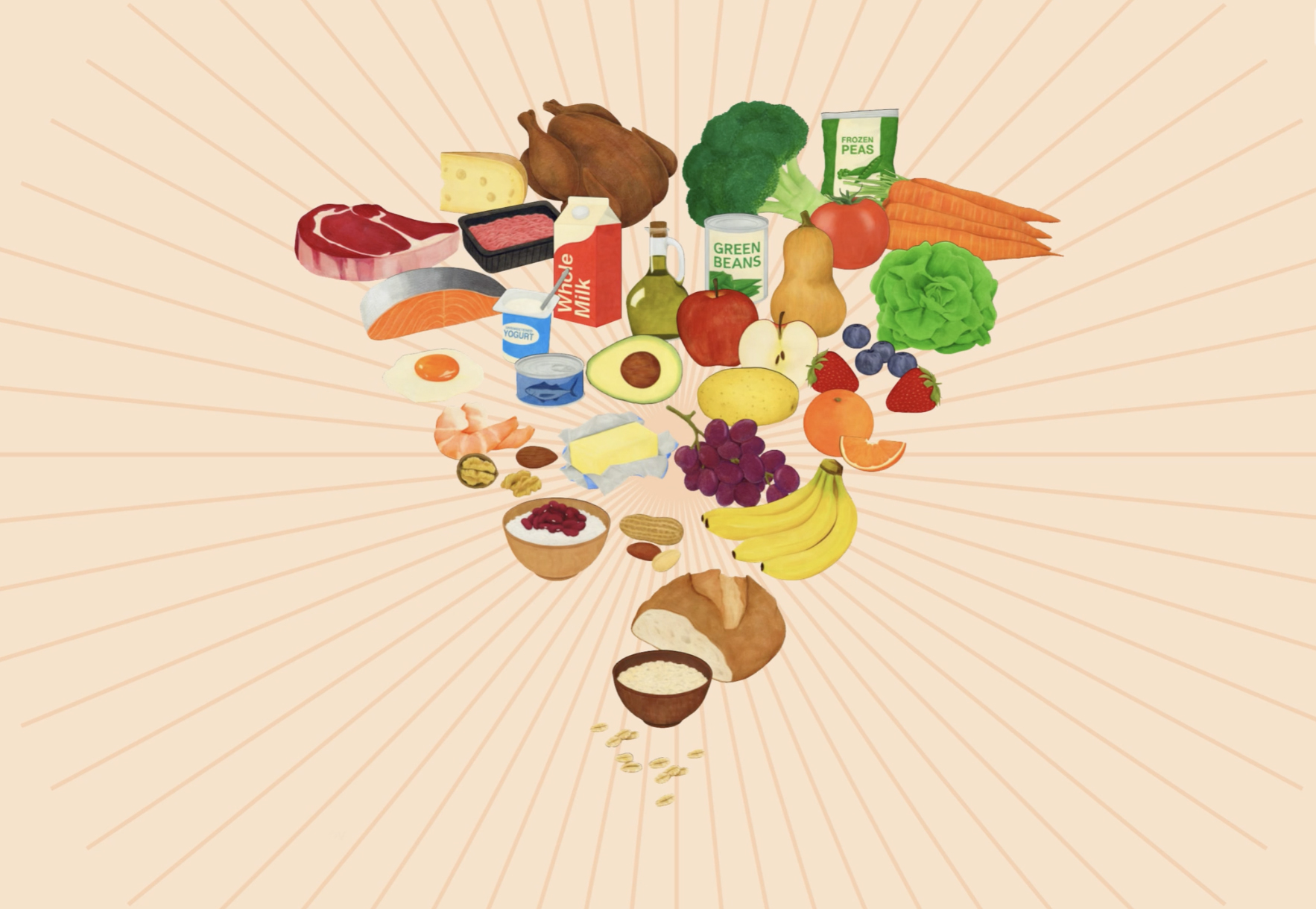
This latest edition puts a strong spotlight on serving kids real, whole foods — the kind that come from farms, not factories. It encourages you to include more nutrient-rich animal proteins and healthy fats, like eggs, beef, chicken, dairy, and fish. These foods naturally provide key nutrients children need for growth, brain development, strong bones, and steady energy.
At the same time, the guidelines recommend cutting back on highly processed foods — including many packaged snacks and fast-food staples (yes, even those convenient chicken nuggets). These foods often contain added sugars, refined oils, and long ingredient lists that don’t offer the same nutritional value as whole foods.
For parents, the takeaway is empowering: focus on building meals around simple, minimally processed ingredients that nourish growing bodies and establish healthy habits for life.
Let’s break down what this means for your family — and how to make it work in real life.
New Food Pyramid: Guidance Rooted in Common Sense
- Prioritize protein at every meal
- Consume full-fat dairy with no added sugars
- Eat vegetables and fruits throughout the day, focusing on whole forms
- Incorporate healthy fats from whole foods such as meats, seafood, eggs, nuts, seeds, olives, and avocados
- Focus on whole grains, while sharply reducing refined carbohydrates
- Limit highly processed foods, added sugars, and artificial additives
- Eat the right amount for you, based on age, sex, size, and activity level
- Choose water and unsweetened beverages to support hydration
- Limit alcohol consumption for better overall health
Tailored Recommendations for Families
- Infants and Young Children: Exclusive breastfeeding is encouraged for the first six months, followed by the introduction of nutrient-dense complementary foods. Iron-fortified formulas are recommended when breastfeeding is not possible. A major update is the “zero sugar” rule, advising no added sugars for children under 2 years.
- Pregnant and Lactating Women: The guidelines focus on meeting increased nutrient needs without excessive calorie consumption, emphasizing nutrient-dense, whole-food sources. There is a push to clarify that “eating for two” is a myth, requiring only modest caloric increases.
- Adolescents: Recommendations emphasize nutrient-dense, whole foods to support growth, development, and bone health.
- General Dietary Shifts: A significant shift toward consuming full-fat dairy (with no added sugar) and prioritizing protein at every meal, alongside healthy fats (avocados, nuts, seeds, seafood).