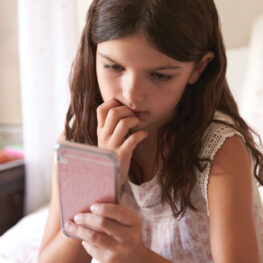


Plenty of young children develop new fears this time of year. Spiders, ghosts, skeletons and wicked witches suddenly sprout up in yards and on front porches. Stores fill with creepy costumes, spooky music plays everywhere from the grocery store to the neighborhood block party, and Halloween movies and decorations are hard to escape. For grown-ups, it’s all part of the fun. But for a young child who’s still figuring out the difference between pretend and real, all that spooky stuff can be a little too much. If you have a nervous Nellie at home, this may be a good time to offer some extra reassurance.
“Parents might find themselves faced with a 2-year-old who used to sleep just fine but now is having a hard time settling down, or is waking up and asking to come into the parents’ room in the middle of the night,” says Robert Sears, M.D., coauthor of The Baby Book (Little, Brown).
And it’s not always the obvious Halloween horrors that frighten children. Sometimes, the most ordinary or unexpected things can send them into a tailspin. The vacuum, the “Birthday” song, Moana or even a Roomba might do the trick, as parents shared in a recent post, “20 Hilarious Things Parents Never Imagined Their Kids Would Fear.”
Of course, Halloween brings its own special challenges. Even older children who are prone to worrying may find their fears triggered by creepy decorations, scary costumes or a neighbor who looks a little too much like a zombie. Here’s how to help your child enjoy the season without letting the spooky stuff steal the fun.
LITTLES: Fears of Things That Go Bump in the Night
Around age 2, children’s imaginations begin to take off. They start imagining things they can’t see, which can open the door to fears of the dark, monsters and things lurking under the bed. Add Halloween’s parade of ghosts, goblins and larger-than-life skeletons, and it’s easy to see how bedtime can suddenly become a little more complicated. The tricky part? Young children are still learning to distinguish fantasy from reality. A preschooler may understand that a Halloween skeleton is supposed to be pretend but still feel frightened when one looms over the neighbor’s front door. Knowing something isn’t real doesn’t automatically make the fear disappear. After all, plenty of adults avoid scary movies because they don’t like how they feel afterward!
Research on children’s development shows that the ability to distinguish fantasy from reality develops gradually. Although children as young as 3 may recognize some differences between the two, their understanding continues to grow throughout early childhood. When a child is frightened, an imaginary monster can feel very real — even when Mom and Dad knows there’s nothing to fear.
Try asking your child what she’s afraid of and what she thinks might help her feel better, Sears suggests. You can also establish calming bedtime routines and skip stories with villains or scary pictures if they’re adding to your child’s worries. Above all, help your little one associate nighttime with comfort and security, not something to dread.
And remember, you don’t have to give up Halloween altogether just because your child finds it frightening. You might skip the haunted house, choose a friendly pumpkin instead of a scary decoration or let your child admire the neighborhood displays from the safety of your arms. There’s no need to push a frightened child into an experience she’s not ready for. A little less spookiness and a little more reassurance can go a long way.
Every child is different, but you can help keep small fears from growing by teaching your child ways to cope. Here are some ideas from Seven Steps to Help Your Child Worry Less, by Kristy Hagar, Ph.D., and Sam Goldstein, Ph.D.
GET TO THE ROOT OF DEVELOPING FEARS
- Play detective. If your child can’t explain what’s frightening him, look for clues. Is it the giant spider on the porch, a scary costume or simply the shadows in his bedroom?
- Be creative. Experiment with ways to help your child feel safer. You might take a closer look at a spooky decoration together during daylight or let your child help choose which Halloween decorations feel fun rather than frightening.
- Change your child’s perception. If your child is convinced there’s a monster under the bed, check together and show him there’s nothing there, suggests Stephen W. Garber, Ph.D., coauthor of Monsters Under the Bed and Other Childhood Fears.
- Clear up false beliefs. When your child tells you what she’s afraid might happen, gently explain what’s really going on. A thunderstorm, for example, isn’t the world being angry with us, and a neighbor dressed as a witch is still the same friendly neighbor underneath the costume.
- Teach coping skills. A simple lesson in slow breathing — in and out — can help a child calm down when fear takes over. Offer a hug, hold a hand or remind your child that you’re right there.
- Be mindful of scary images. Pay attention to what your child sees on television, in movies and online, keeping it age-appropriate. Children’s understanding of the world is still developing, and frightening images can make dangers seem much more common or immediate than they really are. Halloween is no exception: Even a quick glimpse of a frightening movie preview can linger in a young child’s mind.
MODEL BRAVERY
One of the best ways to help your child handle fear is to show her how you handle unfamiliar or unsettling situations. Children look to their parents for cues about what’s safe, so a calm, reassuring response can help them feel more secure.
That doesn’t mean you have to pretend nothing is scary or that you never feel afraid. Instead, show your child that it’s possible to feel nervous and still work through those feelings.
- Let your child borrow your confidence. Children look to you for guidance when they’re unsure what to expect. Reassure your child that she’s safe, and let her know you believe she can handle difficult feelings.
- Easy does it. Feeling brave doesn’t happen all at once. Acknowledge small steps, whether your child is willing to walk past a spooky yard, greet a costumed neighbor or simply talk about what’s frightening him. Give him room to build confidence at his own pace.
- Read stories of struggle and triumph. Remind your child of times she’s already been brave, and choose books about characters who face their fears and discover they’re stronger than they thought.
Most of all, remember that Halloween should be fun for your child, too. You don’t have to visit every haunted attraction, admire every creepy decoration or insist that your little one love the spooky side of the season. Sometimes, the best Halloween memories are made when you follow your child’s lead, offer an extra hug and let a friendly pumpkin be scary enough.