
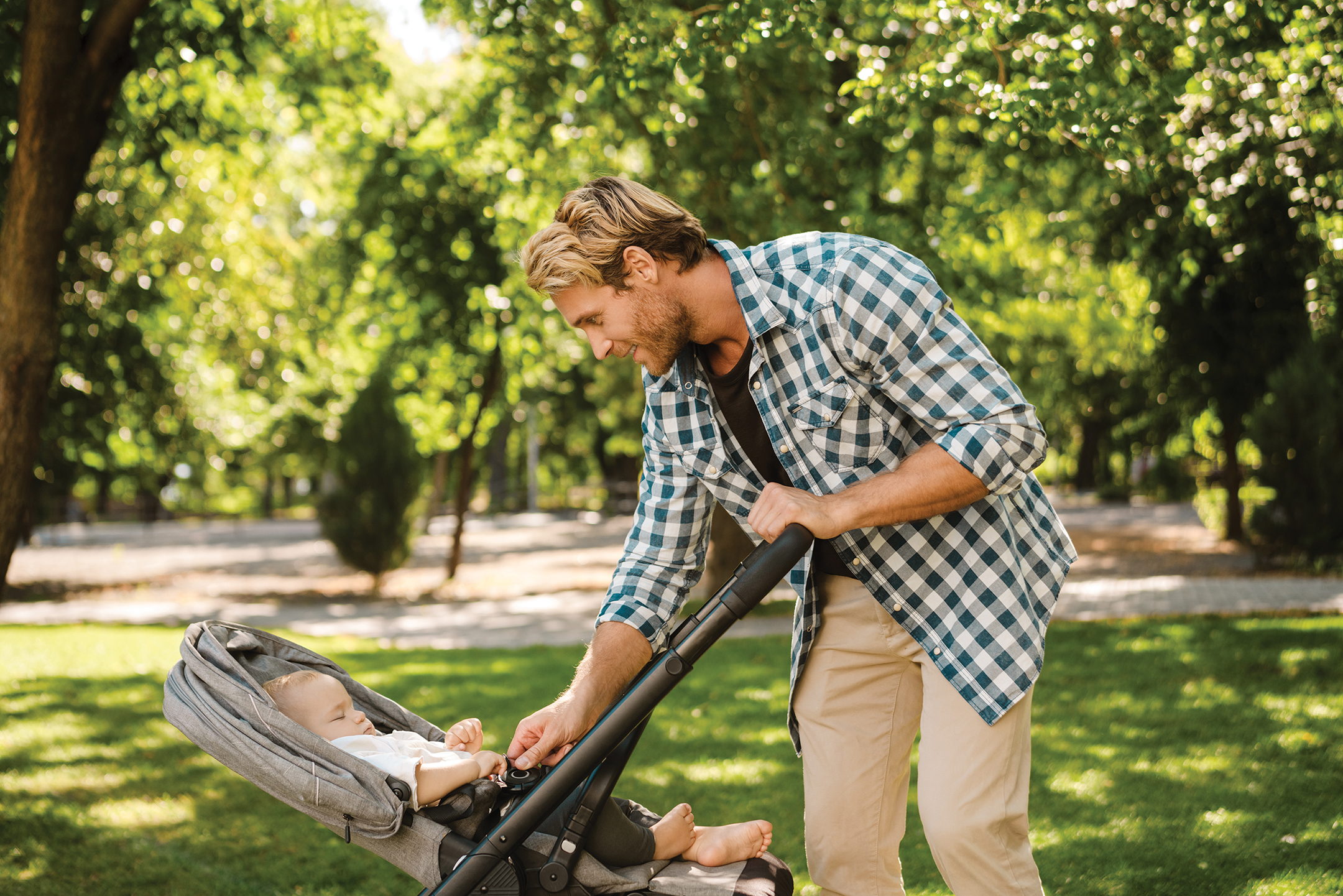
For many new parents, the idea of the checked-out dad feels increasingly outdated. Today’s fathers are taking paternity leave, wearing the baby carrier at the grocery store, scheduling pediatric appointments and texting the daycare teacher just as often as moms. Many grew up wanting something different from the fathers they had — not necessarily better fathers, but more emotionally present ones. Welcome to the Dad Era.
That doesn’t mean modern parenting feels perfectly balanced. Far from it. Couples are still negotiating who carries the mental load, whose career bends more around family life and how two exhausted adults can share the invisible work of raising children. But for many young families, fatherhood itself has fundamentally changed.
The Dad Era
This generation of dads isn’t interested in being a sidekick parent. They want to be fully in it.
And increasingly, younger fathers are redefining what masculinity looks like in the process. For many dads today, emotional presence is no longer viewed as optional parenting “extra credit.” It’s part of what being a man means.
Research shows that involvement matters deeply — not only for children, but for fathers themselves. Studies have found that men who take paternity leave are more likely to stay actively involved in childcare long term. Increasingly, fathers are sharing not only hands-on caregiving, but also the behind-the-scenes labor of parenting: planning meals, packing lunches, sifting through outgrown outfits, organizing activities and anticipating what the family needs next.
Even policy is slowly catching up. Tennessee enacted a six-week paid parental leave law for state employees in 2023 after the birth or adoption of a child — a reminder that cultural expectations around fatherhood are still evolving.
Naturally Suited
Research continues to dismantle the outdated idea that men are somehow less naturally suited to caregiving.
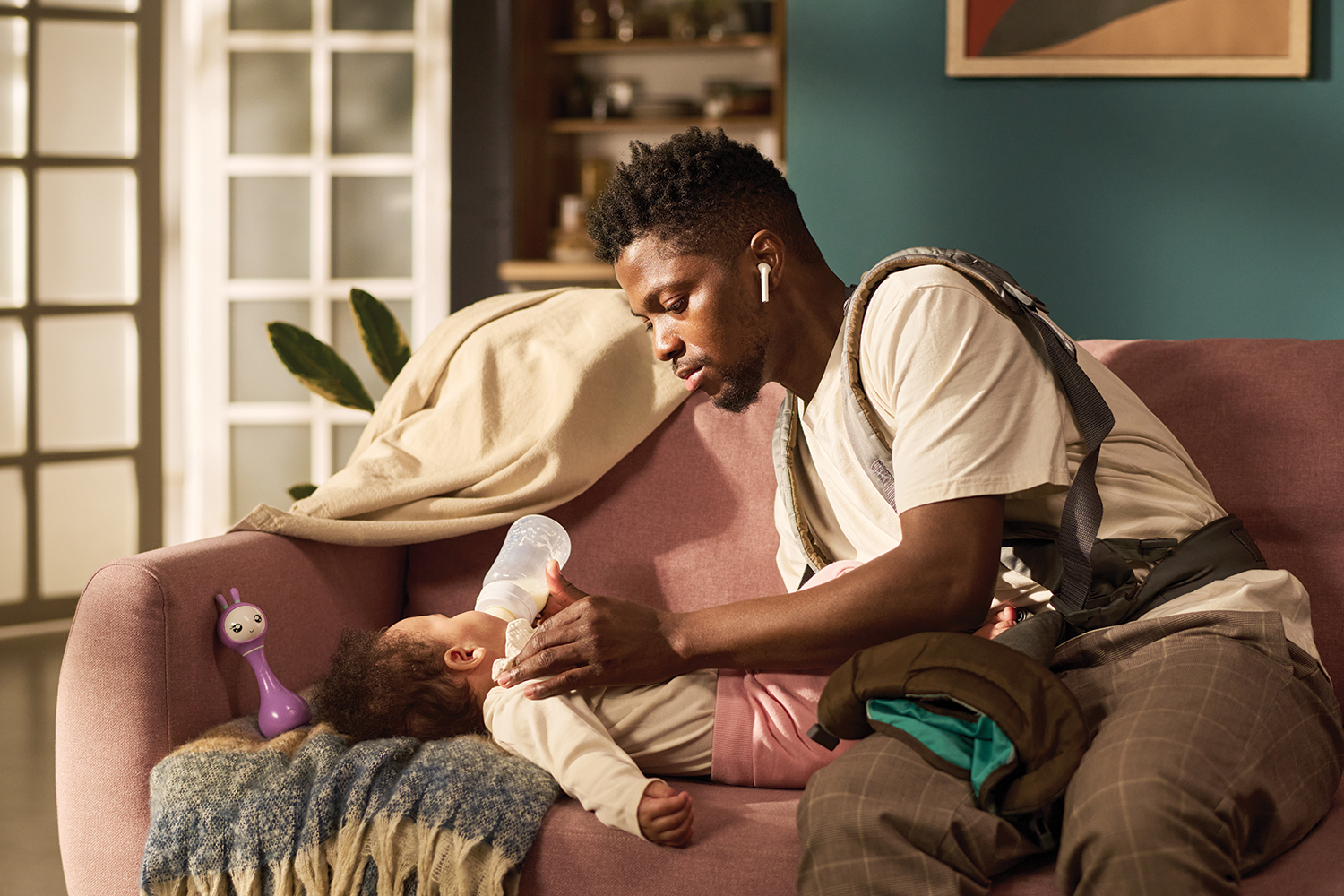
Scientists have found that fathers experience biological changes that help support bonding with their babies. Oxytocin — often called the “love hormone” — rises when dads hold, feed and play with their newborns. Skin-to-skin contact, or kangaroo care, strengthens that bond even further.
At the same time, testosterone levels often dip, making fathers more responsive to their babies’ emotional cues. Fathers also experience increases in prolactin — the hormone best known for helping mothers produce breast milk — which researchers believe may also encourage nurturing behavior in dads.
A large body of research supports the importance of fathers in child development. Dr. Kyle Pruett has long argued that fathers bring something distinct and valuable to parenting. In Fatherneed: Why Father Care Is as Essential as Mother Care for Your Child, he writes that “fathers don’t mother” — and that’s exactly the point.
While mothers often provide comfort and security, fathers frequently encourage exploration, confidence and healthy risk-taking. Children benefit from both approaches.
Researchers say the impact of involved fatherhood often appears in the ordinary moments children carry with them for life: a dad who listens without dismissing feelings, comforts a child after failure, shows up consistently or simply remains emotionally available day after day. Those experiences help shape how children understand security, empathy, relationships and their own self-worth.
More Than the “Fun Parent”
For many dads today, involvement starts immediately — not years later when children are old enough to throw a ball around or tag along to hobbies.
“My wife and I agreed that I would be all-in immediately,” says Brian Upshaw, a father of two. “Being a dad means doing the hard things as well as the fun things.”
That mindset reflects a larger shift among fathers. Many aren’t satisfied with simply being the “fun parent.” They want emotional closeness, daily routines and the ordinary intimacy that comes from showing up over and over again.
Upshaw says the rewards come in small moments — like when his baby crawls into his lap during the day.
“It never fails to send that ‘in love’ feeling surging through my body,” he says.
He also describes a deeper emotional shift that came with fatherhood.
“After my son was born, I found a new purpose,” Upshaw says. “Life is bigger than just me now.”
Many fathers describe parenthood in similar terms — not as a loss of identity, but as an expansion of it. The cultural stereotype of dads as detached providers or bumbling assistants feels increasingly out of step with how many younger fathers see themselves.
And Oh, the Mental Load
As fathers engage at home, many couples are rethinking how parenting responsibilities are divided — especially the invisible work.
In many households, mothers still carry most of the mental load: remembering appointments, rotating outgrown clothes, planning birthday parties and keeping track of the family’s emotional temperature. But more dads are intentionally stepping into those roles, too.
That shift can sometimes feel awkward at first, especially for couples raised with different expectations around gender and caregiving. Experts say sharing responsibility often requires both parents to let go of old assumptions — including the idea that one parent should automatically be the family manager.
And increasingly, younger dads are recognizing just how consuming that invisible labor can be.
One father recently joked that he fully understood the mental load only after finding himself decorating the Christmas tree with the kids, cooking dinner, cleaning the kitchen and finishing laundry while his wife relaxed nearby.
“That used to be me,” he admitted. “We’ve come full circle — and I’m exhausted.”
The humor lands because parents now recognize the truth behind it: parenting isn’t simply about helping. It’s about carrying responsibility together.
The Science Behind Dads
Researchers now agree that involved fathers positively affect nearly every area of a child’s development.
Children with engaged dads tend to show fewer cognitive delays, better school readiness, lower rates of aggression and fewer symptoms of depression.
In Do Fathers Matter?, science journalist Paul Raeburn points to studies showing that children whose fathers regularly played with them, read to them and participated in caregiving were less likely to develop behavioral problems later in life.
But researchers say the benefits go beyond academics and behavior. Children with emotionally present fathers often grow up with a stronger sense of confidence and connection. Sons may learn that empathy and emotional openness are strengths, not weaknesses. Daughters often develop healthier expectations for future relationships by watching fathers model attentiveness, respect and consistency at home.
The benefits extend beyond childhood — and beyond the kids themselves.
Many fathers describe parenting as emotionally transformative, expanding not only their sense of responsibility, but also their capacity for patience, empathy and connection.
“When strangers see me alone with my toddler at the park, they sometimes tell me I’m an amazing father,” says Josh Depesquale, a father of three. “But I’m not going for ‘amazing father.’ That feels like a very low bar. I’m going for good parent.”
That may be the clearest sign of how much fatherhood has evolved: many dads no longer see caregiving as extraordinary. They simply see it as parenting.
And for many children growing up today, the sight of a father packing lunches, braiding hair, scheduling dentist appointments or soothing a crying toddler may not feel remarkable at all. To them, it will simply feel normal — which may be the biggest cultural shift of all.