

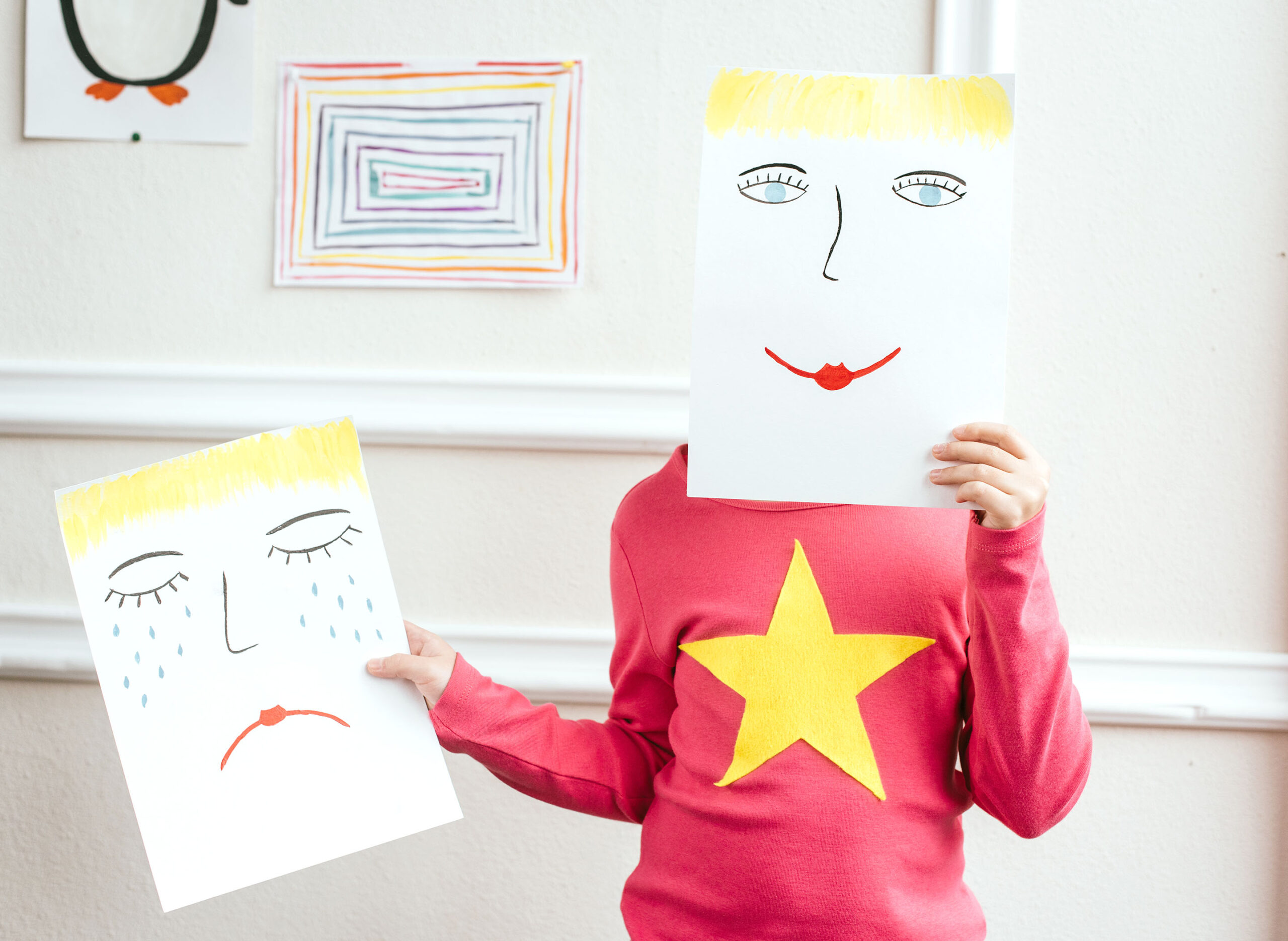
Tears over the wrong color cup. A slammed bedroom door. A middle-school friendship that suddenly implodes. Big feelings are part of growing up. And if you’re like most parents, emotions are just one more thing to manage in an already busy day. That’s right — it’s time to embrace being an emotion coach.
Because those emotional moments aren’t interrupting your parenting — they’re actually the most important part of it!
As artificial intelligence becomes remarkably good at writing essays, answering questions and solving problems, it’s easy to wonder what skills today’s children will need to thrive tomorrow. Ironically, the answer may not be found in technology at all. The qualities that will matter most are the ones no machine can truly master: empathy, resilience, self-awareness, compassion and the ability to build meaningful relationships. These qualities come from you, your child’s emotion coach.
In other words, emotional intelligence.
Deeply Human Skills Begin at Home
Long before AI entered the conversation, psychologist and emotional intelligence pioneer Daniel Goleman saw this coming. In the foreword to psychology expert John Gottman Ph.D.’s groundbreaking Raising an Emotionally Intelligent Child, he wrote that since childhood has changed so dramatically because of technology, parents will need to become much more intentional about teaching “the basic emotional and social lessons” children once learned more naturally.
Today, what he says feels almost prophetic. Because AI can summarize a book, solve a math problem and write an email. But it cannot comfort your child with a boo-boo, read the mood in a room, repair trust after an argument or celebrate another person’s success with genuine joy. Those are deeply human skills. And they begin at home.
“Emotional intelligence begins to develop in the earliest years. All the small exchanges children have with their parents, teachers, and with each other carry emotional messages,” says Goleman. And emotional intelligence is becoming the human edge every person needs.
Why Emotional Intelligence Matters More Than Ever
Emotional intelligence isn’t simply about being kind or polite. It’s the ability to recognize, understand and manage your own emotions while also understanding the feelings of others. Children who develop these skills early and in an ongoing way tend to navigate friendships more successfully, manage frustration with greater confidence and recover more quickly from setbacks. Research also links emotional intelligence with better mental health, stronger relationships and even improved academic success.
And yet children aren’t born emotionally intelligent. They’re taught. Not through lectures, but through thousands of ordinary moments with the grownups around them who love them.
Your Child’s First Emotion Coach Is You
The greatest influence on your child’s emotional development isn’t a school program, an educational app or even the latest parenting book. It’s you.
Your kids study you constantly for all of the different nuances of emotion you express. They notice how you react when you’re stuck in traffic, disappointed by bad news or frustrated after a long day. They watch how you handle conflict, whether you apologize after losing your temper and whether you talk openly about your emotions or pretend they don’t exist.
That can sound intimidating, but it’s actually freeing. Your child doesn’t need a perfect parent. Your child needs a real one.
When you say, “I’m feeling frustrated, so I’m going to take a few deep breaths,” or, “I’m sorry I yelled earlier. I wish I’d handled that differently,” you’re demonstrating one of life’s most valuable lessons: emotions are normal, manageable and nothing to be ashamed of.
As parenting experts Adele Faber and Elaine Mazlish famously wrote in How to Talk So Kids Will Listen & Listen So Kids Will Talk, children shouldn’t be protected from every uncomfortable feeling. “When children are denied the right to be angry,” they wrote, “they are denied the opportunity to learn how to deal with anger.”
That’s the heart of emotion coaching.
Feelings Aren’t Problems to Solve
One of the biggest parenting traps is believing our job is to make difficult feelings disappear. We instinctively jump in with reassuring phrases like, “You’re fine,” “Don’t cry,” or “It’s not a big deal.” We do it because we love our kids. We also do it because their discomfort makes us uncomfortable.
Psychologist Becky Kennedy, author of Good Inside, captures this beautifully: “Two things are true: your child is having a hard time, and your child is giving you a hard time.”
Recognizing both truths changes everything. Because instead of trying to erase emotions, emotion coaching helps children understand them and empowers them to move forward.
Every Feeling Carries Information.
Fear tells us something feels unsafe. Sadness reminds us something mattered quite a bit. Anger often signals that a boundary has been crossed. Excitement invites us toward new experiences. Emotions aren’t weaknesses, they’re signals.
And children simply need someone beside them to help interpret those signals.
How to Be an Emotion Coach
When your child melts down, the goal isn’t to stop the emotion — it’s to guide your child through it. That begins by slowing down and noticing what’s really happening beneath the behavior. A tantrum might actually be exhaustion. Defiance may be anxiety. Tears could simply be disappointment.
Once you’ve recognized the emotion, connect before you correct. Listen with empathy instead of rushing into solutions. Help your child put words to what they’re feeling — “You seem really disappointed,” or “That must have been frustrating.” Only after emotions begin to settle is a child ready to think about solutions and it’s important to know that connection always needs to come before correction — that’s where the real learning happens.
The Little Moments Are Actually the Big Moments
You may imagine that emotional intelligence develops during deep conversations, but in reality, it grows in everyday life and in simple everyday living.
• It’s naming feelings after soccer practice.
• It’s talking about everyone’s good experiences and bad experiences around the dinner table.
• It’s reading stories together and wondering aloud how a character might feel.
• It’s apologizing after a rough morning.
• It’s playing board games, pretending to run a restaurant with stuffed animals or working through the disappointment of losing a game.
Play, especially, deserves more credit than it gets. Long before children can explain complicated emotions, they act them out. Through pretend play, games and team sports, they’re quietly practicing empathy, flexibility, patience and resilience —all without realizing they’re building emotional intelligence.
Raising Humans in the Age of AI
As technology continues to evolve, you may worry about preparing your kids for careers that don’t even exist yet. The truth is, no one knows exactly what those jobs will look like. But we do know this: employers, educators and psychologists all agree that human skills are becoming increasingly valuable: Communication, collaboration, empathy, adaptability, resilience. These are all qualities that AI cannot replicate. They are also the qualities children build every time a caring adult helps them understand a feeling instead of dismissing it.
So the next time your child melts down over spilled cereal, a forgotten homework assignment or a friendship gone sideways, remember what’s really happening. You’re not wasting time. You’re doing something AI never can. You’re teaching your child how to be fully, beautifully human.